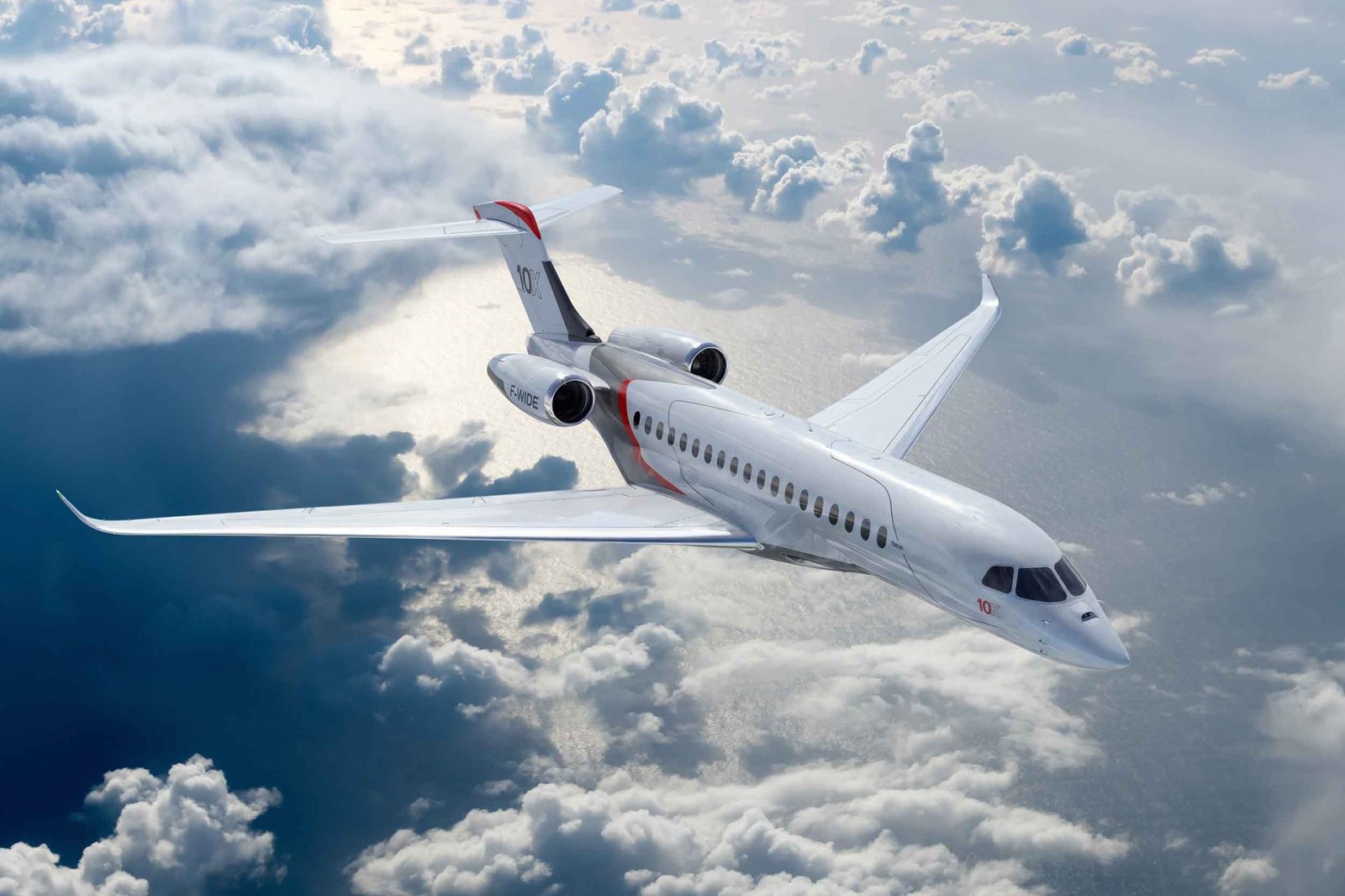
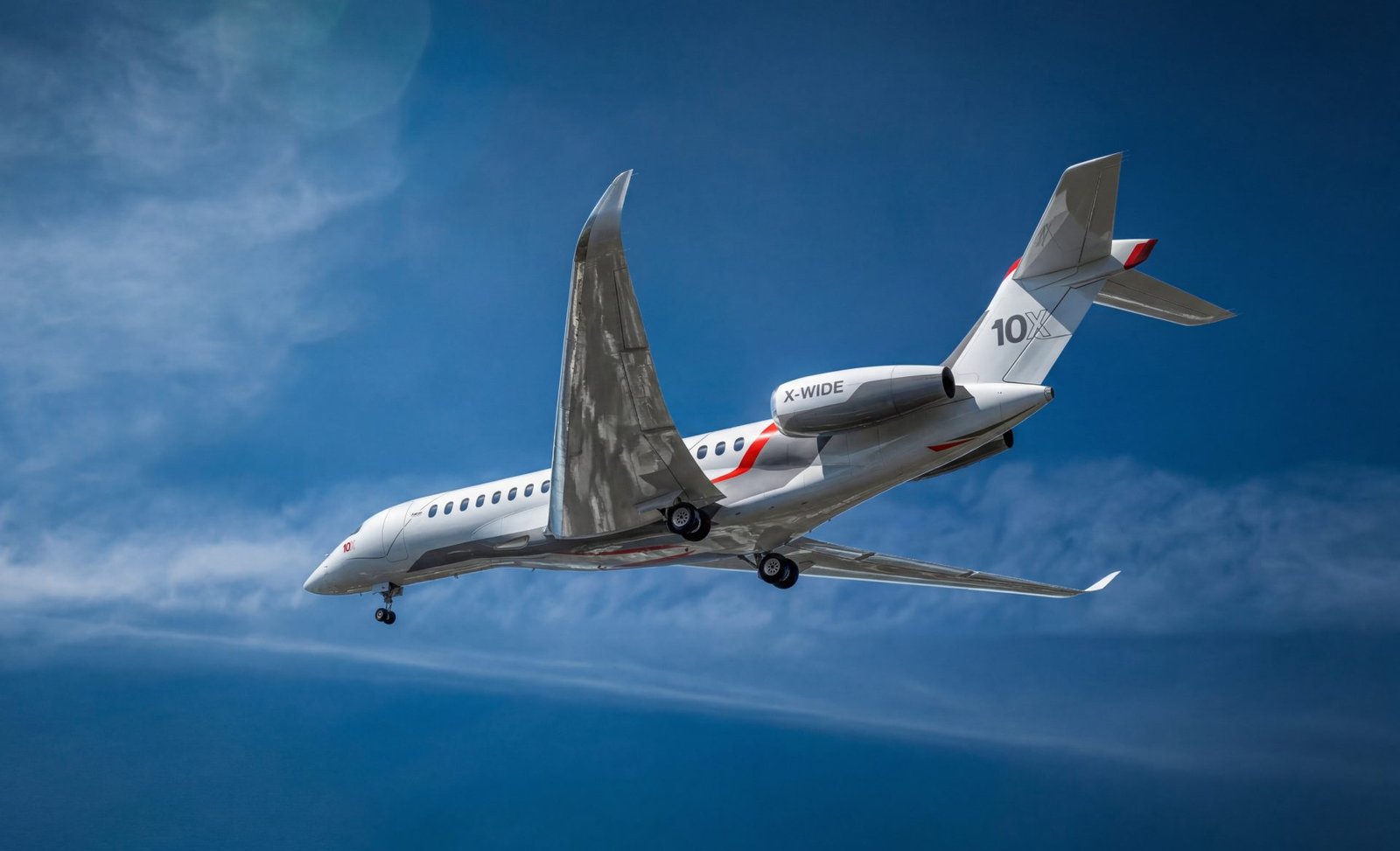
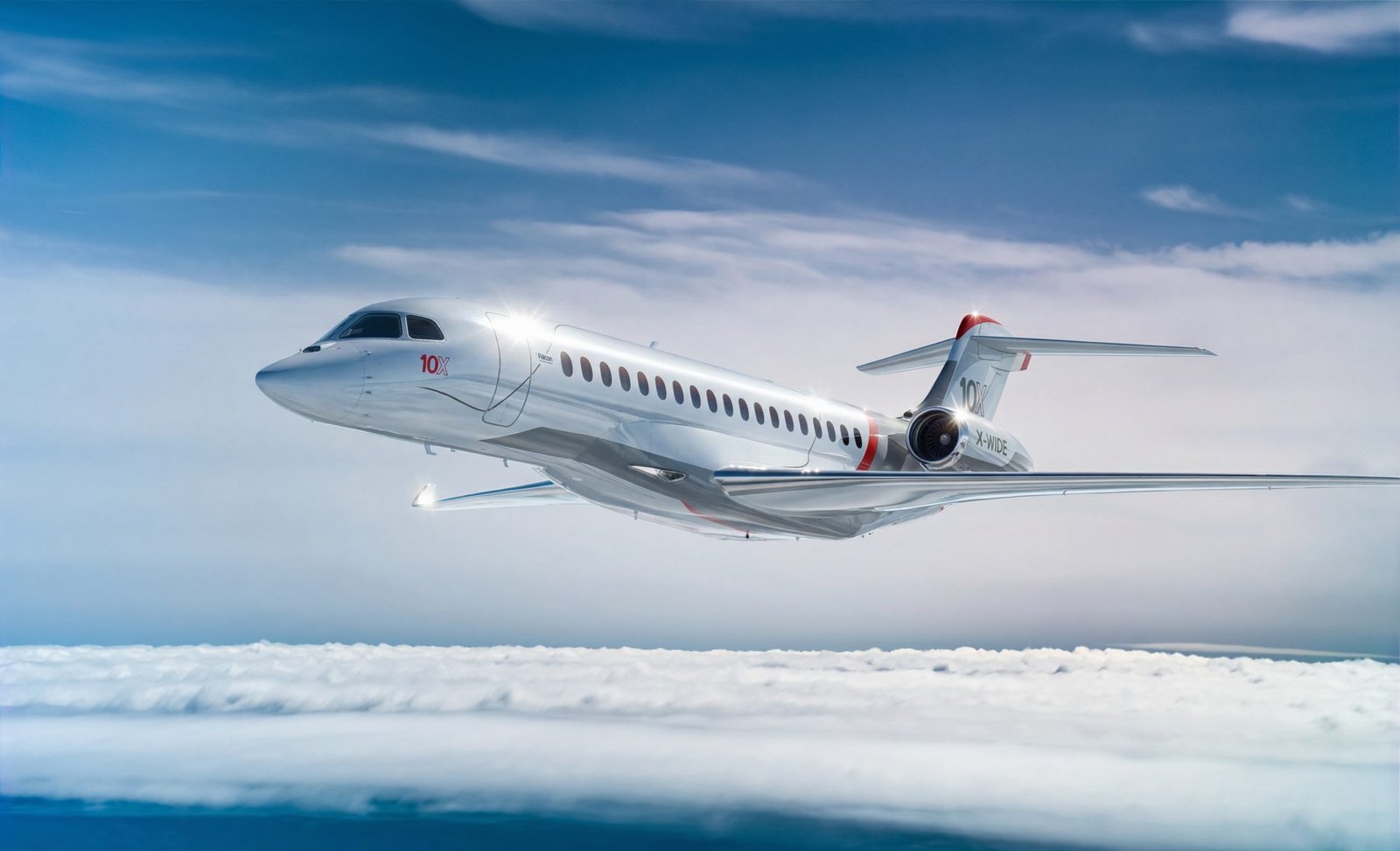
Dassault’s Falcon 10X is not an evolution of an existing aircraft. It’s a clean-sheet design, built to compete at the very top end of the business jet market, where range, cabin size, and operating flexibility all matter equally.
The French company made an early decision not to stretch or modify an existing Falcon, but to design a completely new aircraft with new structures, new aerodynamics, and new production infrastructure to support it.
The result is a twin-engine, ultra long-range business jet with a maximum range of 7,500 nautical miles (13,890 km) at Mach 0.85, and a maximum operating speed of Mach 0.925. These numbers place it directly against aircraft like the Gulfstream G700 and Bombardier Global 8000, but Dassault has taken a slightly different approach focusing heavily on cabin volume and flight control technology derived from its military programmes.
Cabin: Size and Flexibility Over Styling
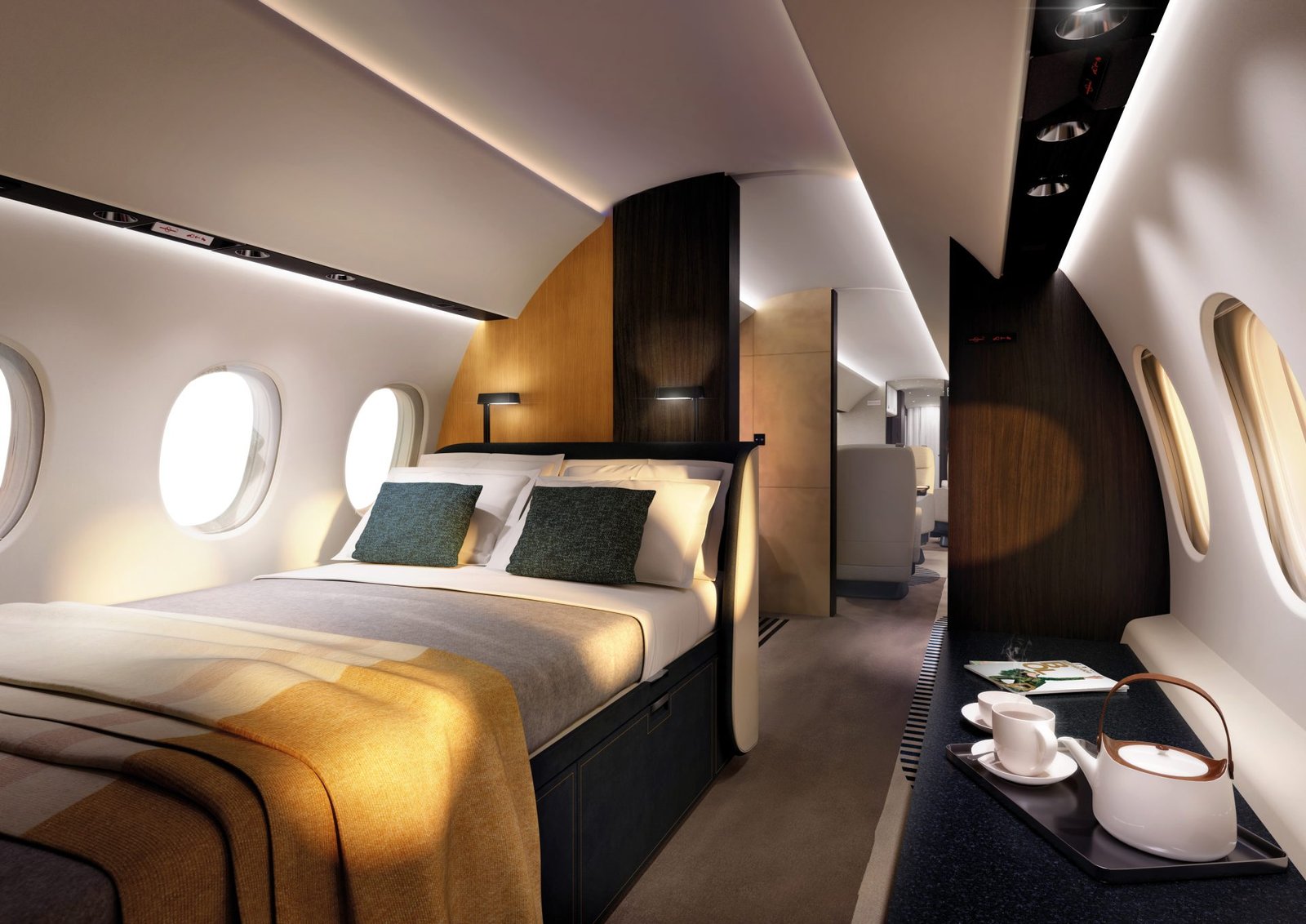
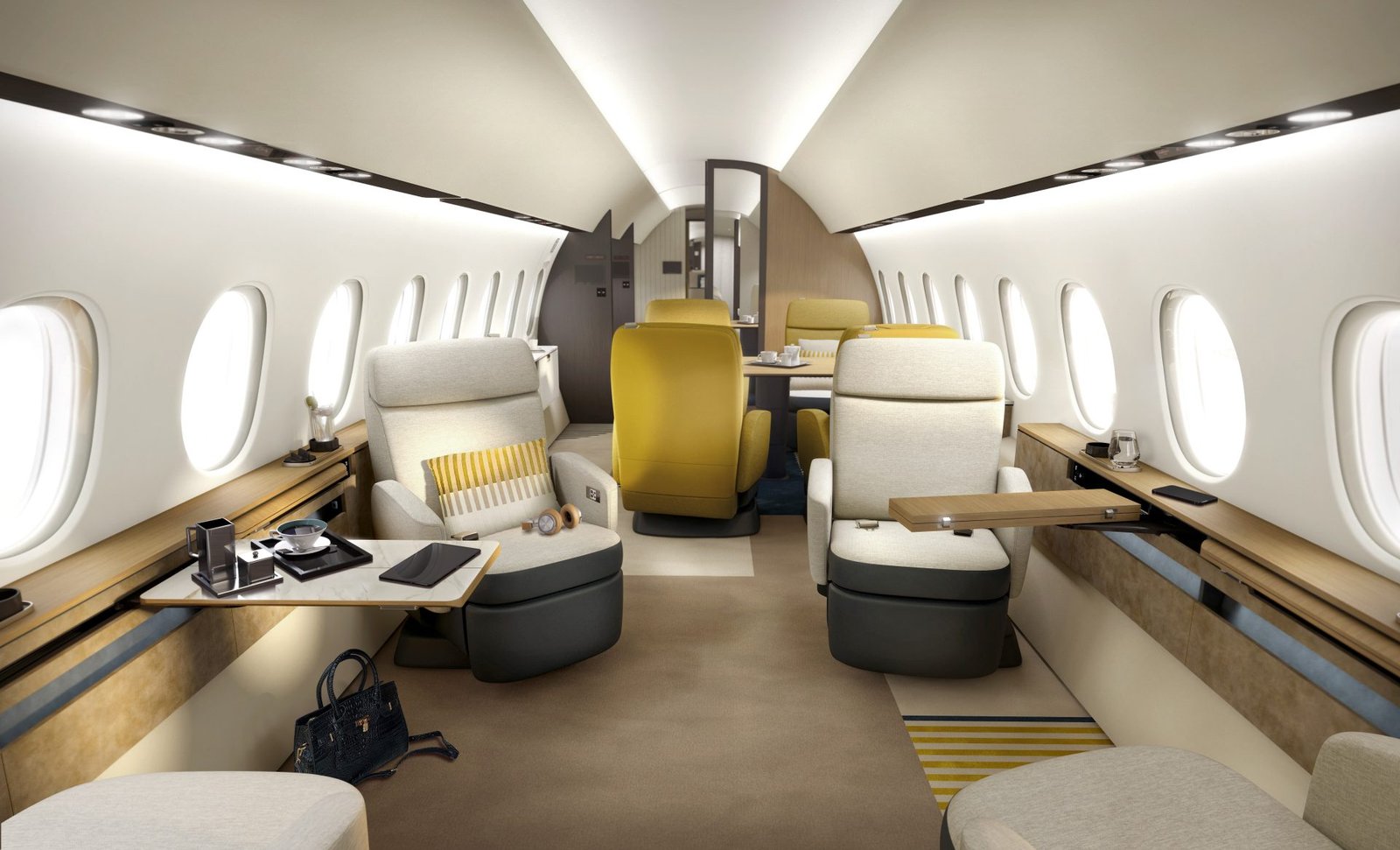
The Falcon 10X’s defining feature is its cabin. At 2,780 cubic feet (around 79 cubic metres), it is the largest cabin volume of any purpose-built business jet currently announced.
Dimensions are straightforward:
- Height: 6 ft 8 in (2.03 m)
- Width: 9 ft 1 in (2.77 m)
- Length: 53 ft 10 in (16.4 m)
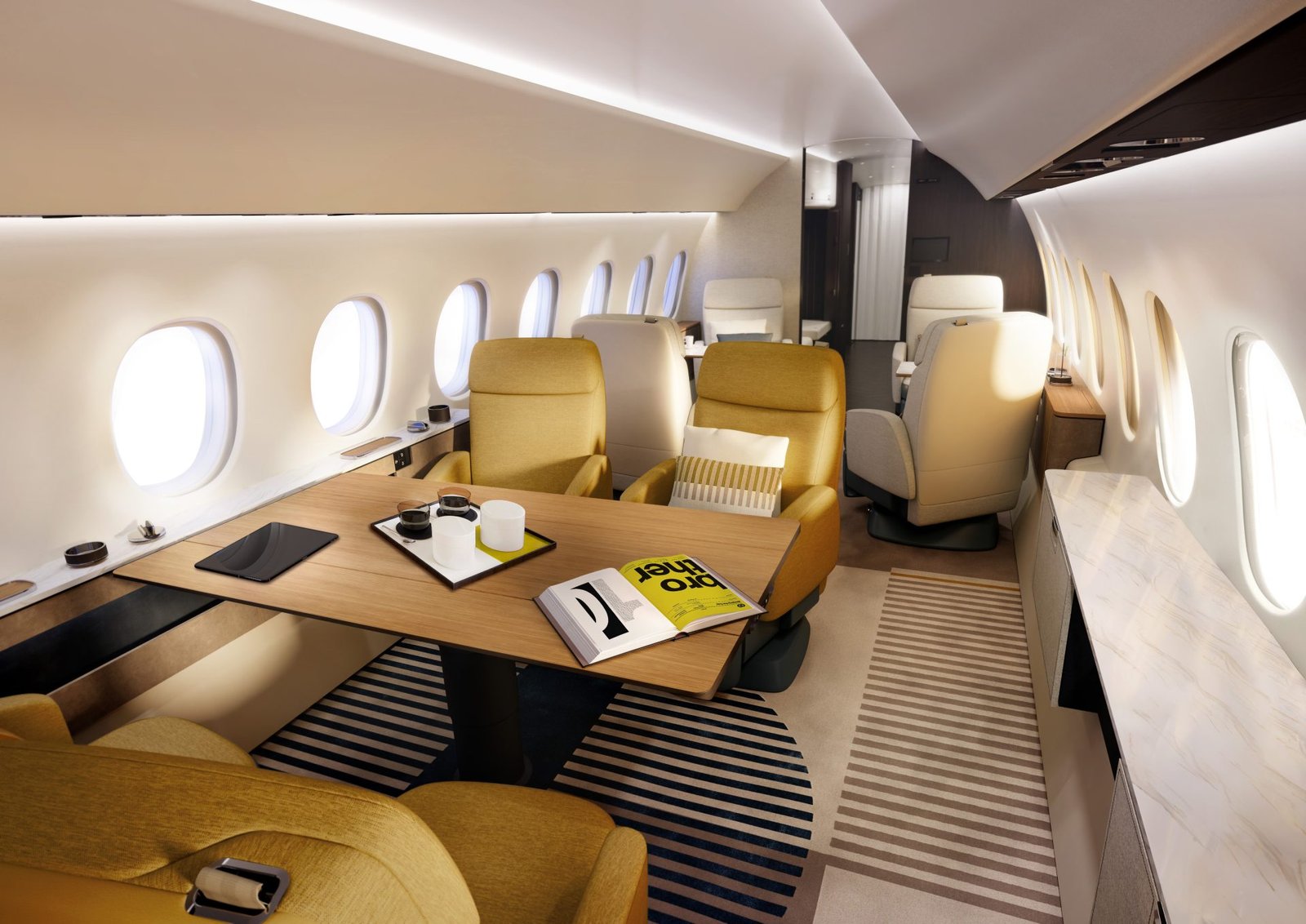
It’s also about 20 cm wider than its closest competitors, which sounds minor but materially changes how the cabin can be used. Passengers can move past each other in the aisle more easily, seats don’t need to be recessed into side ledges, and the usable space near the walls increases.
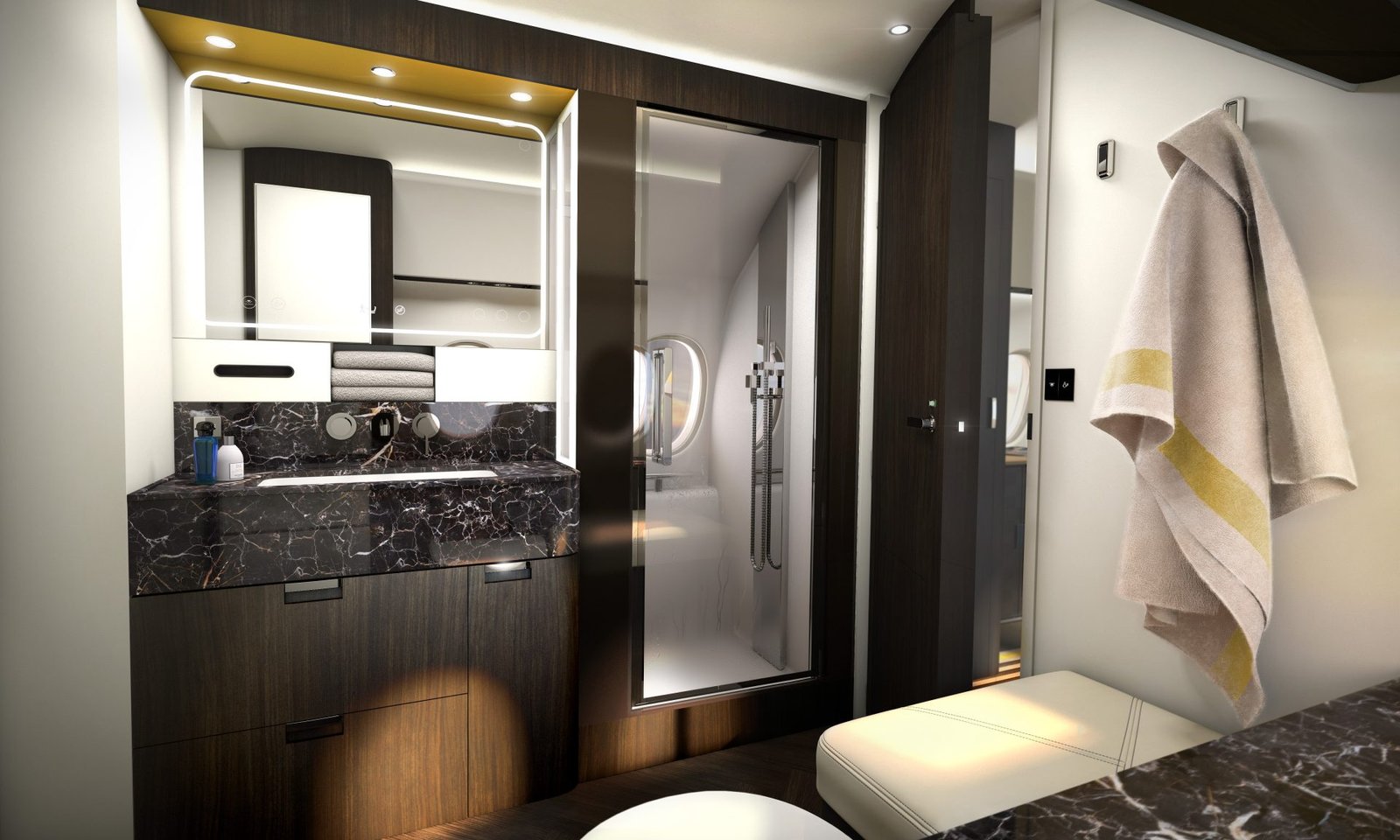
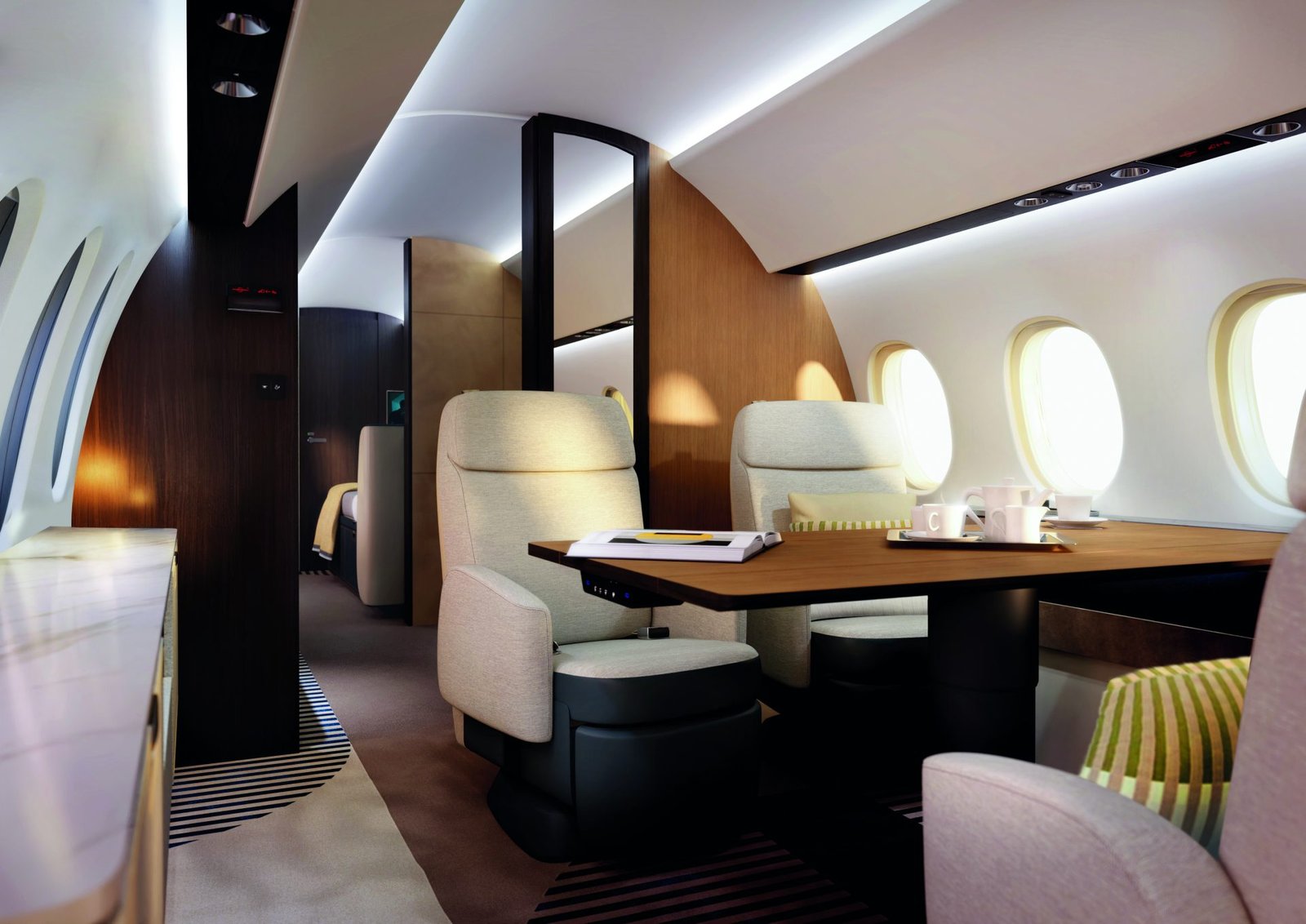
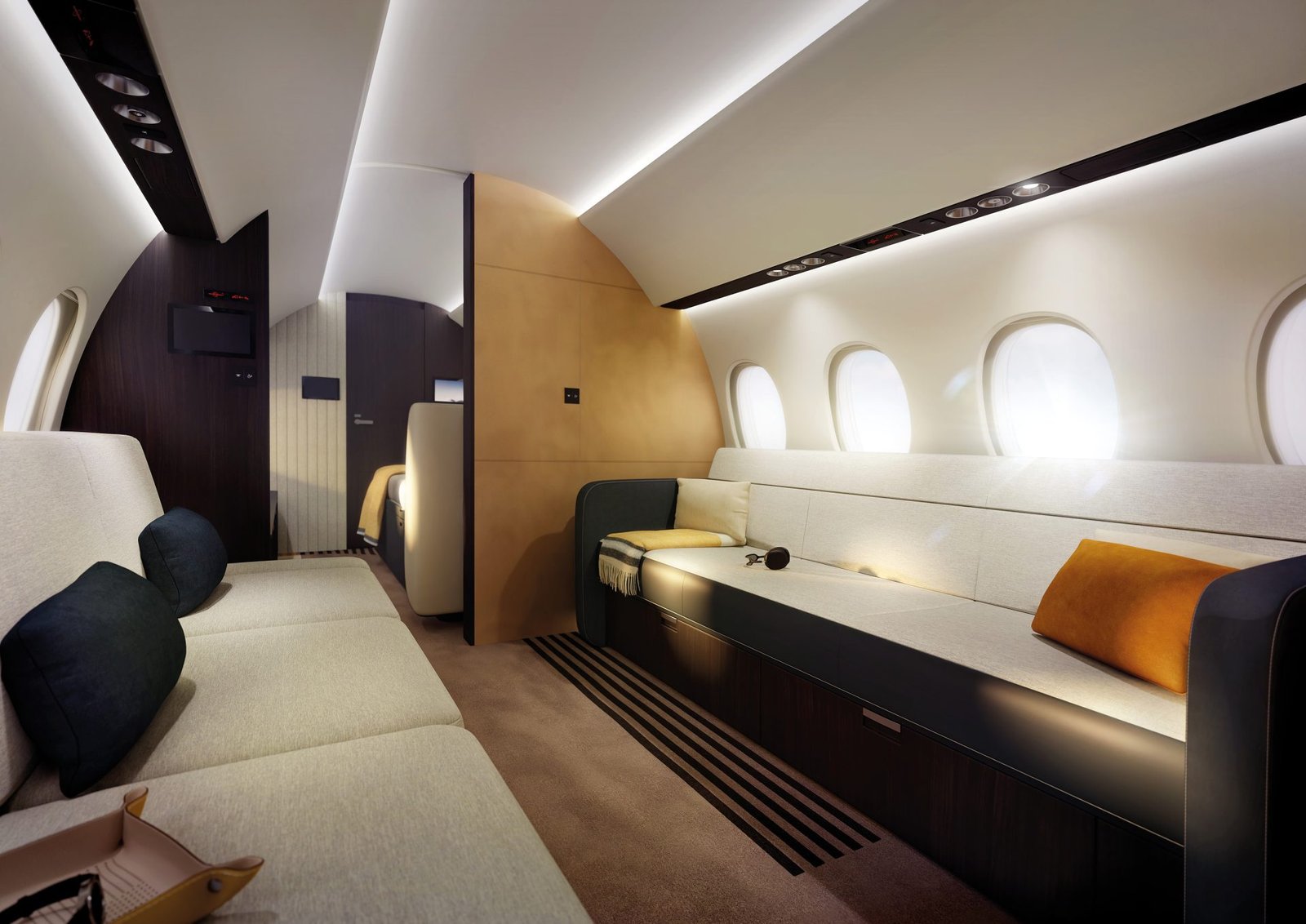
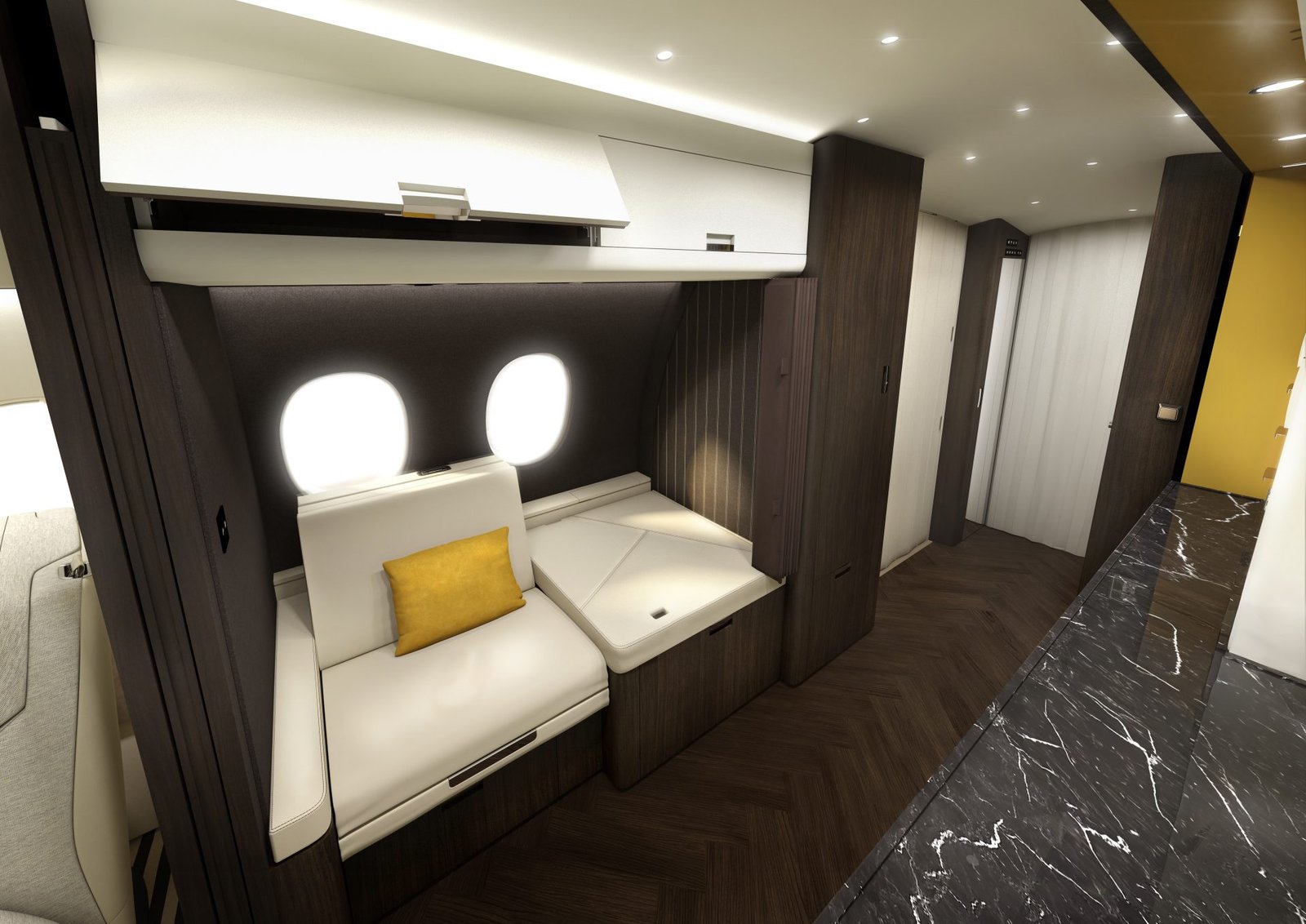
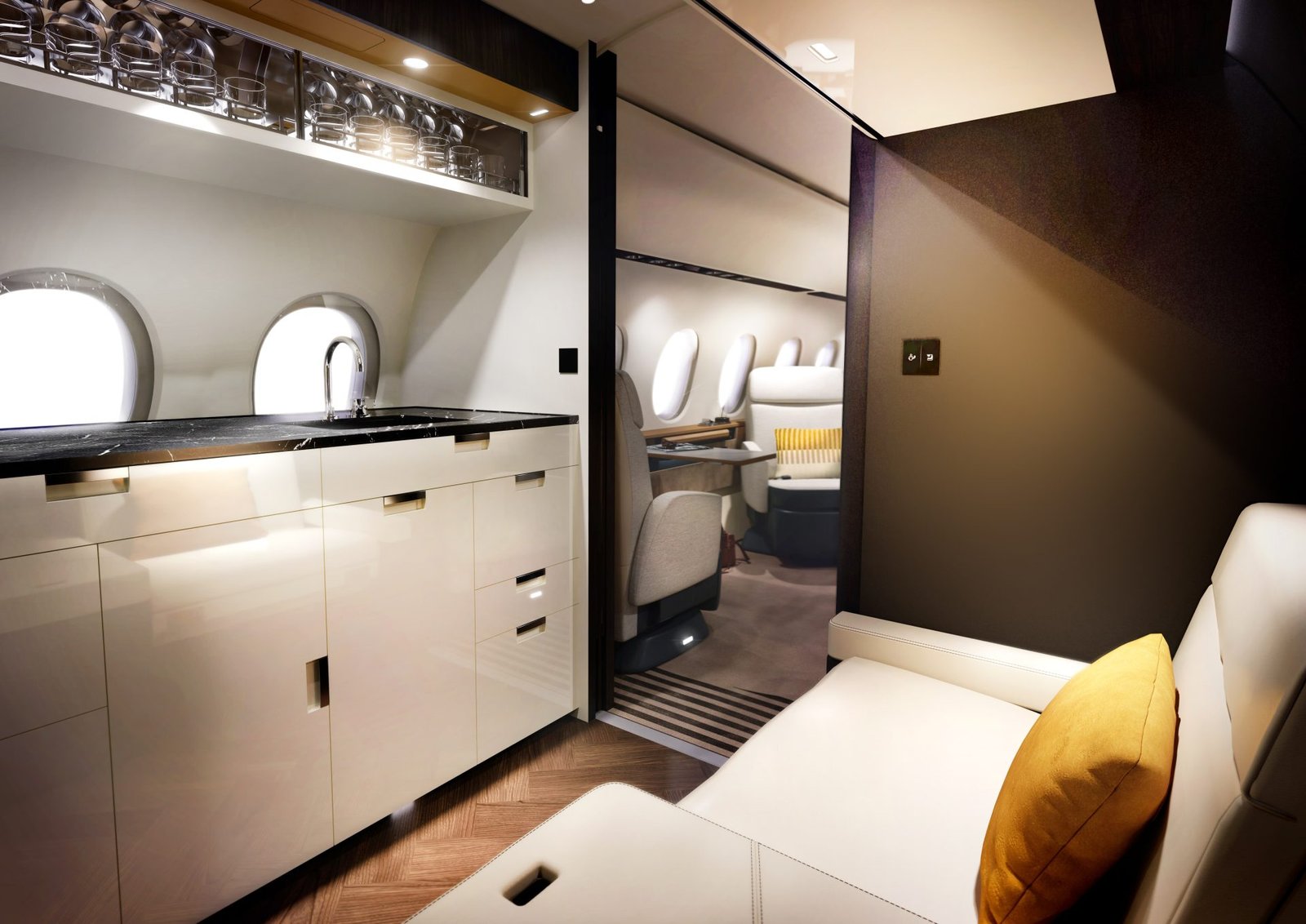
The interior is built around a modular system. The baseline layout is four equal zones, but the structure allows those zones to be resized or combined. For example, the aft section can be extended into a full stateroom with a queen-size bed and a dedicated lavatory with a shower—something still uncommon in business aviation.
Other configurations include:
- Dedicated conference/dining areas
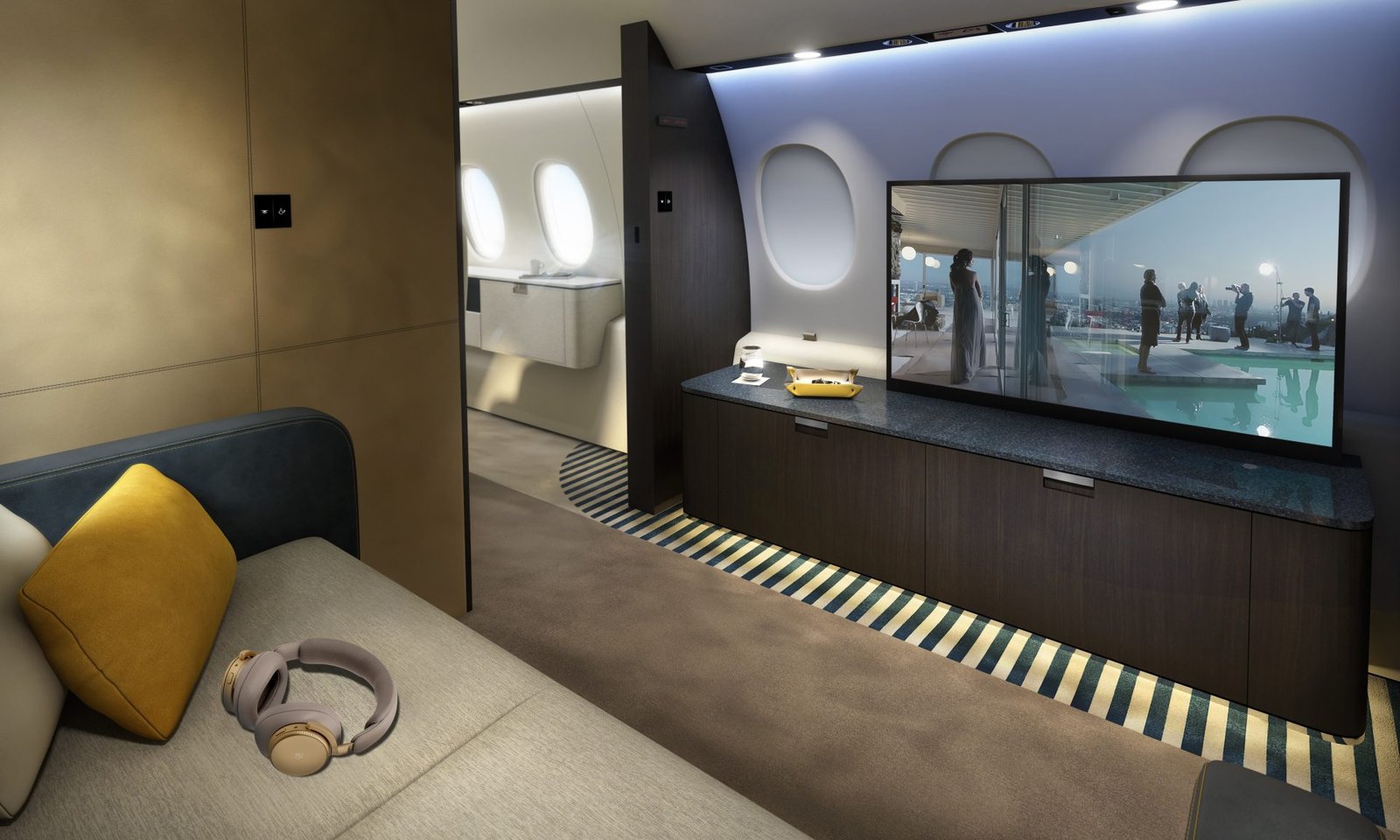
- Media or private meeting rooms
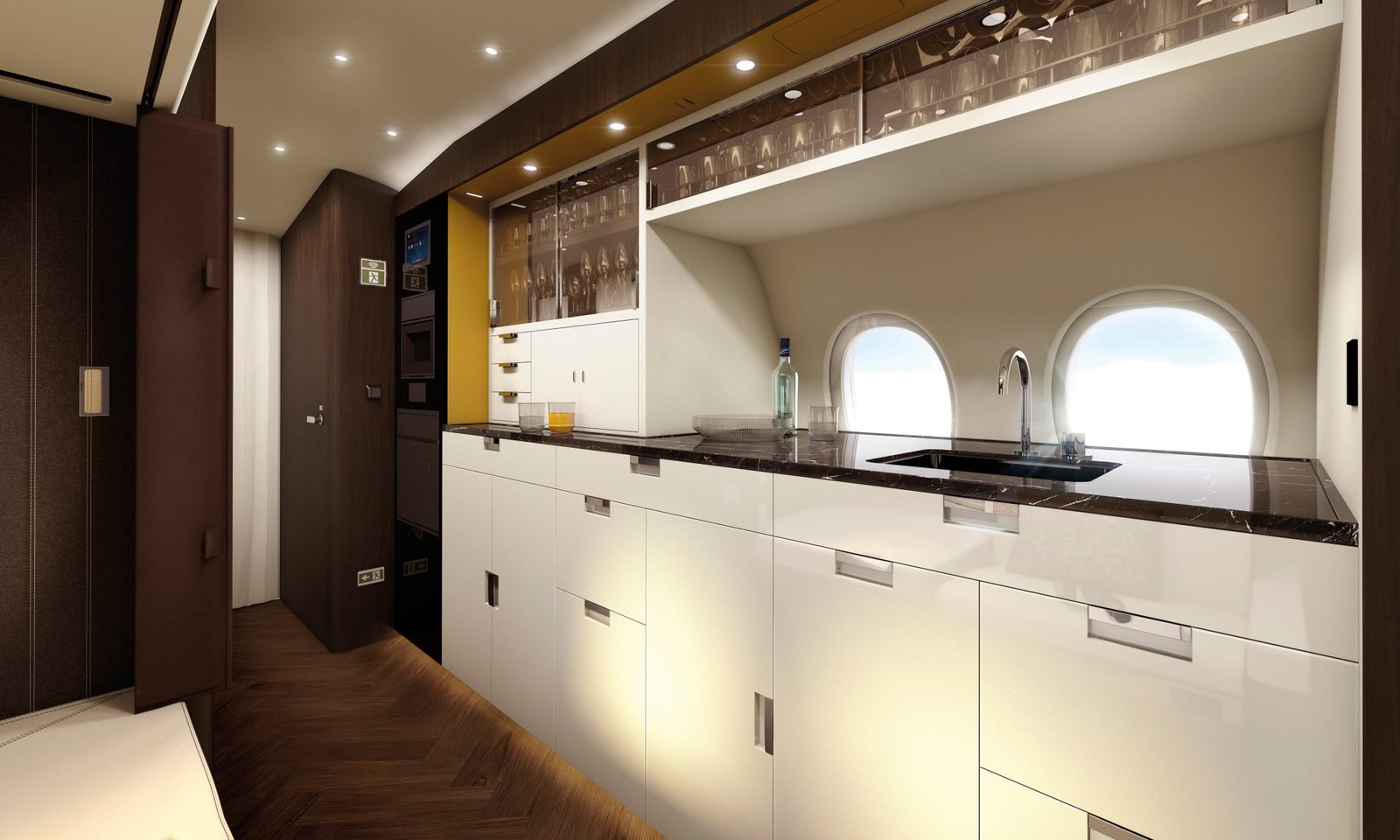
- Larger galley and crew spaces
The flexibility is real, not cosmetic. The aircraft is effectively designed so the interior architecture can be reconfigured without major structural compromise.
Cabin Environment: Pressure, Noise, and Air
Cabin conditions are engineered for long-haul comfort rather than marketing claims. At a cruising altitude of 41,000 ft, cabin altitude is maintained at 3,000 ft. That’s significantly lower than older long-range jets and reduces fatigue on long sectors.
Air quality is managed through a system that provides 100% fresh air, with filtration removing ozone and volatile organic compounds.
Noise levels are expected to match or improve on the Falcon 8X and 6X, both of which operate below 50 dB in cruise—roughly equivalent to a quiet domestic environment.
There are also 38 windows, each roughly 50% larger than those on the Falcon 8X, increasing natural light significantly.
Performance: Long Range Without Losing Access
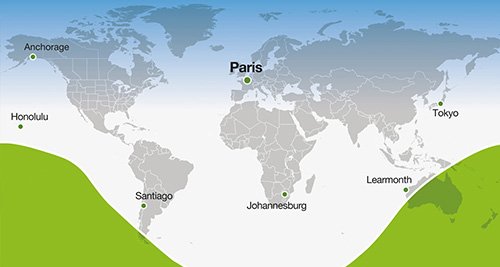
Range is the headline figure: 7,500 nm. That enables routes such as New York–Shanghai, Hong Kong–New York, or Paris–Santiago without refuelling.
At higher cruise speeds (around Mach 0.90), slightly shorter city pairs such as New York–Dubai or Hong Kong–San Francisco are achievable.
Where Dassault traditionally differentiates itself is airport access. Despite its size, the 10X is designed to operate from typical business aviation airports and challenging approaches, including London City Airport.
Key field performance figures:
- Take-off distance: under 6,000 ft
- Landing distance: under 2,500 ft
That combination—long range plus short-field capability—is unusual at this size.
Flight Deck: Fighter Influence, Properly Applied
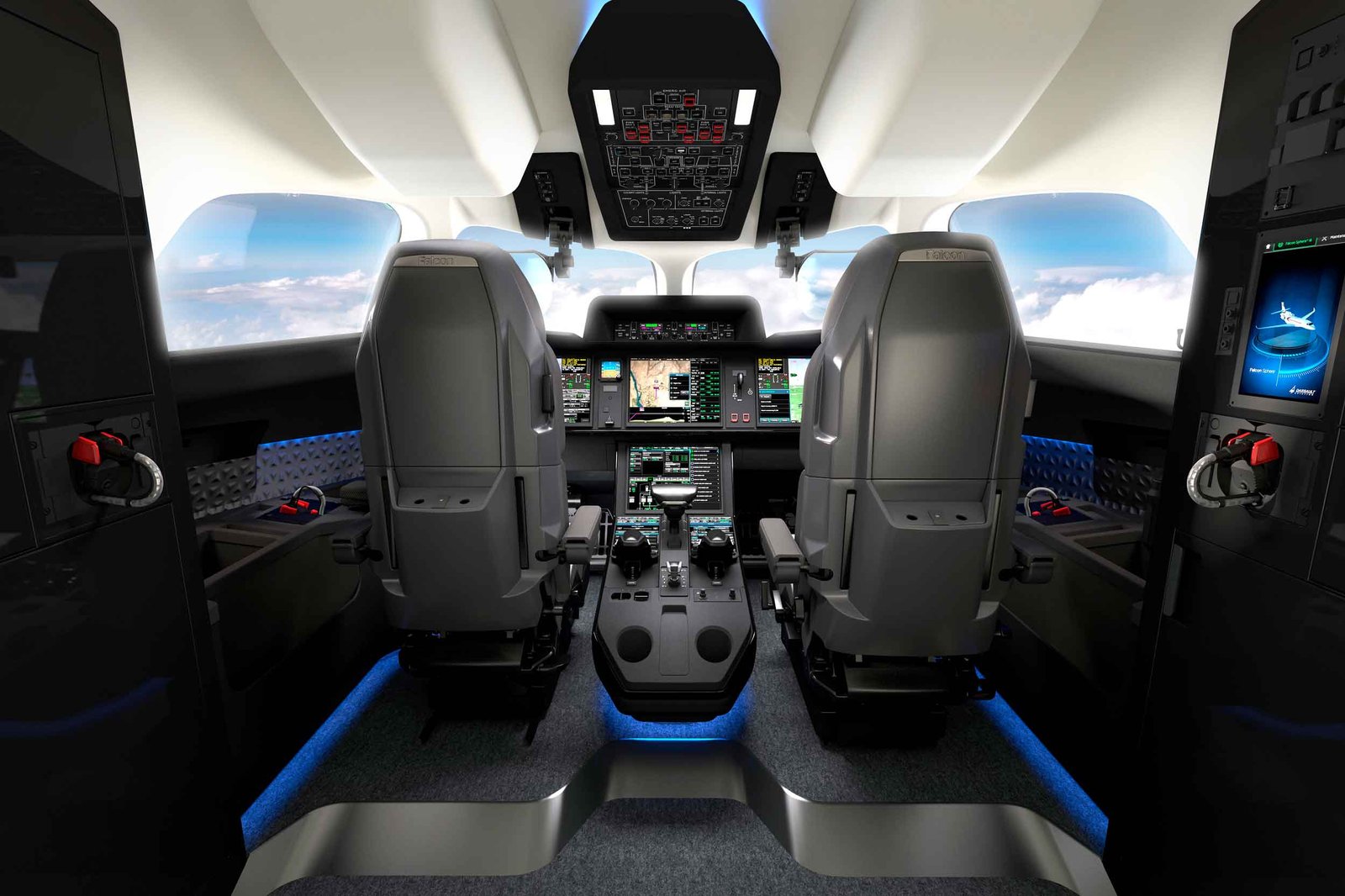
The 10X flight deck is built around Dassault’s NeXus system, which replaces much of the traditional switchgear with touchscreen interfaces while retaining physical controls where they are more effective (for example, in turbulence).
The key difference is the integration of military-derived systems. The aircraft uses a digital fly-by-wire control system that extends to secondary controls (flaps, slats, spoilers, nosewheel steering), improving automation and protection against pilot-induced upsets.
A notable feature is HOTAS (Hands-On-Throttle-And-Stick), taken directly from Dassault’s Rafale fighter. This allows pilots to control key functions without looking down at instruments, supported by dual head-up displays.
There is also an Automatic Recovery Mode. If the aircraft enters an unusual attitude, the system can return it to stable flight automatically at the push of a button—even from extreme conditions such as inverted flight.
This is not standard in business aviation and represents a genuine safety advancement rather than a convenience feature.
Structure and Aerodynamics: Built for Speed and Efficiency
The fuselage is entirely new, with a circular cross-section optimised for both cabin space and aerodynamic efficiency.
Interestingly, Dassault chose aluminium over a composite fuselage after concluding that modern metal construction offered comparable weight without the complexity of composite lightning protection and systems integration.
The wing, however, is fully composite. It provides:
- Lower weight (around 900 lb saving)
- Higher aspect ratio
- Greater aerodynamic efficiency
- Increased stiffness to maintain shape at high speed
Sweep angle is 33.7 degrees, higher than earlier Falcons, optimised for high-Mach cruise.
The aircraft also adopts a T-tail and twin-engine configuration, moving away from Dassault’s traditional trijet layout. This is a direct response to efficiency requirements at higher cruise speeds.
Engines: Rolls-Royce Pearl 10X
Power comes from two Rolls-Royce Pearl 10X engines, each producing over 18,000 lb of thrust.
The engine incorporates:
- Advanced combustor design for lower emissions
- Blisk fan for improved efficiency
- High-pressure turbine upgrades for longer life
It has already been tested on 100% Sustainable Aviation Fuel, and the aircraft will be certified for full SAF operation.
An integrated health monitoring system tracks thousands of parameters, enabling predictive maintenance and reducing downtime.
Systems and Maintenance
The FalconScan diagnostic system monitors over 100,000 parameters in real time, providing maintenance teams with detailed system status before faults become operational issues.
This is a step change from earlier systems that tracked only a few hundred data points.
Capacity and Practical Details
The aircraft has:
- Baggage volume: 198 cubic feet
- Maximum take-off weight: 115,000 lb
- Maximum operating altitude: 51,000 ft
The baggage compartment is one of the largest in its class and includes powered loading access.
Bottom Line
The Falcon 10X is designed around three priorities: cabin space, long-range capability, and advanced flight control systems.
The cabin is objectively larger and more configurable than anything currently flying. The range and speed put it firmly in the ultra long-range category. The real differentiator, however, is the integration of fighter-derived flight control technology into a business jet platform.
Strip away the marketing language, and the aircraft is a logical progression of Dassault’s strengths: efficient aerodynamics, strong short-field performance, and advanced flight controls. The 10X simply applies those principles at a larger scale than the company has attempted before.