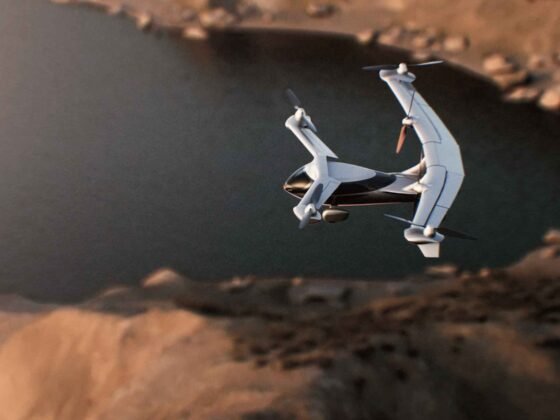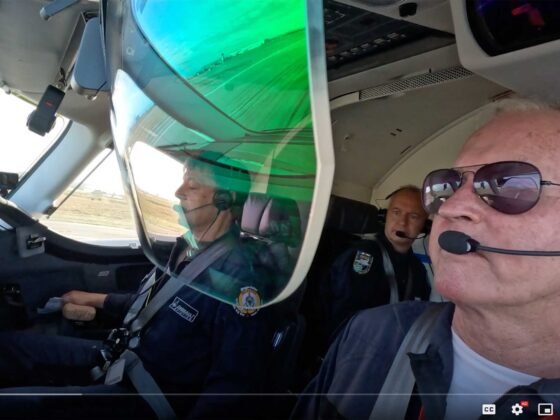
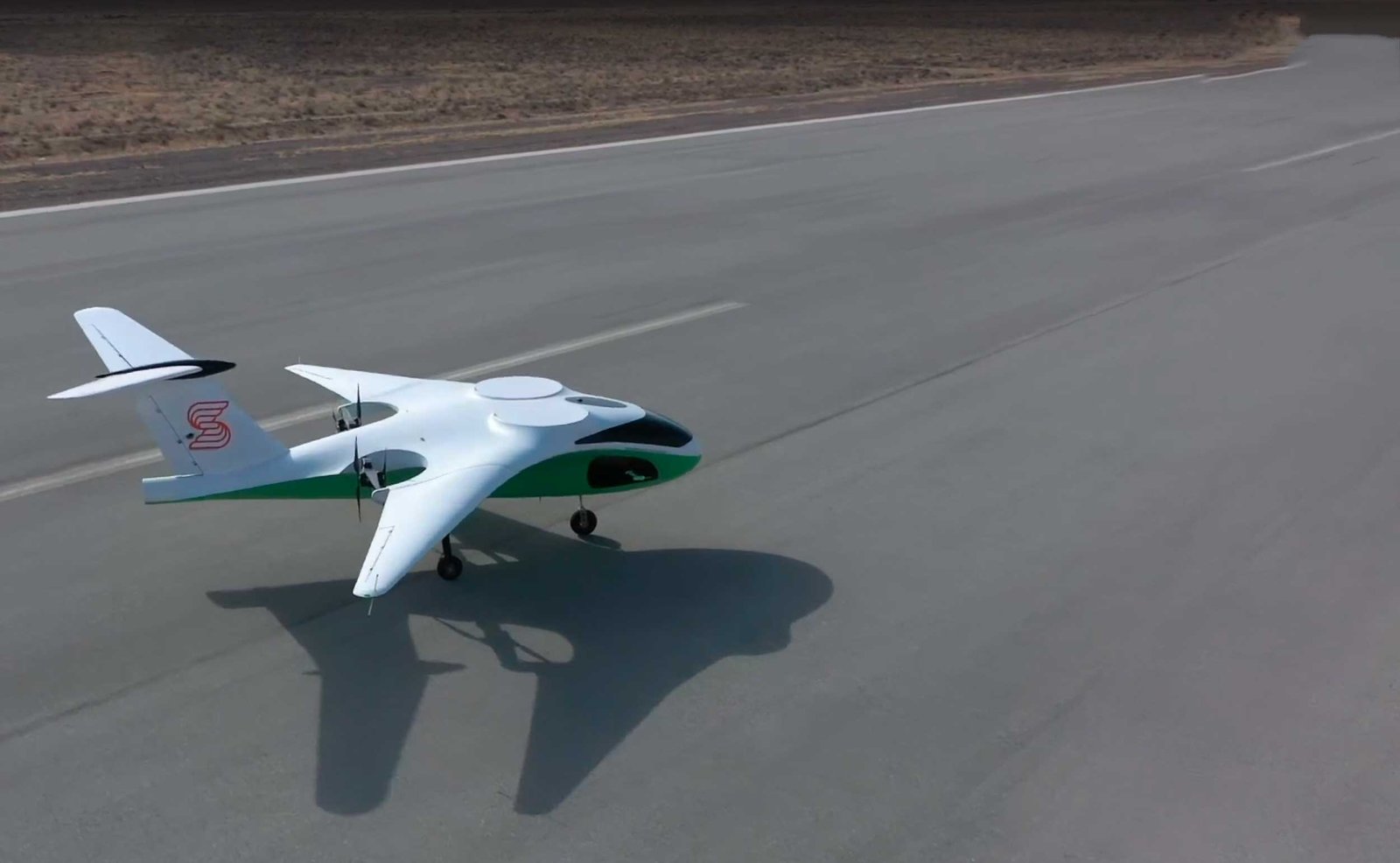
A British company, Samad Aerospace, has made the first flight of a half-scale demonstrator of its planned Starling electric Vertical Take-off and Landing (eVTOL) aircraft.
Norman Wijker, Chief Technical Officer of Cranfield-based Samad, said, “CTOL (Conventional Take-off and Landing) trials are an essential step towards VTOL aircraft development. Ticking off the CTOL flight capability is a crucial step towards the validation of all flight modes.
“With CTOL trials complete, we will begin hovering trials and the flight trials will be concluded by transition between hovering flight and aerodynamic flight in both directions.”
During the CTOL flight test held in November 2020, the aircraft took off at a length of 250 metres, demonstrating a great potential for Short Take-off and landing (STOL). Take-off and landing were smooth, and the vehicle maintained a comfortable cruise at a speed of 90mph airborne for over five minutes.
The flight tests included evaluations on aircraft flight dynamics, performance as well as handling qualities. As the e-Starling adopts a semi blended wing body (BWB) design, it requires a low angle for take-off; it is important to understand when the aircraft is capable of taking-off and at which speed.
Apart from slow and fast taxiing on the runway as well as take-off and landing; the half-scale demonstrator also performed banking manoeuvres in addition to tests on yaw, pitch and roll. The results show very stable in terms of handling quality.
Among other tests of subsystems were: brake, telemetry, redundancy links, and ensuring the centre of gravity (CG) of the aircraft is at the correct design place.
“The data provided by the flight tests were sufficient and invaluable for us to feed into fine tuning the aircraft for auto pilot to allow us to conduct a subsequent test on autopilot mode,” said one of the engineering crew on-site.
Samad Aerospace is a disruptive green-tech start-up based in the UK. The company’s team of engineers are pioneering the development of the world’s fastest hybrid-electric vertical take-off and landing (VTOL) aircraft.
Preparations for the e-VTOL flight tests are already underway. 2021 will see the completion of the 50% e-VTOL version of the e-Starling.
The Q-Starling will be powered by a hybrid-electric turbo-generator which will provide power for a large diameter hover fan and a fly-by-wire controlled ‘Reaction Control System’ (RCS). The turbo-generator will then provide forward thrust once the aircraft has transitioned from vertical flight.
Controlled by a comprehensive electronic flight system, the Q-Starling will have numerous and extensive safety systems in-built to prevent the aircraft from departing the flight envelope. In keeping with other ultra-light aircraft it will feature as a ballistic recovery system.
The traditional rudder pedals have been absorbed into the flight system and present the pilot with a simplified side-stick control. The Q-Starling will maintain full authoritative control but having the benefit of a simplified control interface.