Last time I flew a photo shoot I was aware that my formation flying skills were really rusty. So if I want to do that again – and I do – I’m going to have to go on a course to sharpen up those skills too.
Former military pilots seem to hang on to their formation flying abilities even if they haven’t used them for a while – probably because they practised them for hour after hour while they were training, and then used them for real when in action.
A current military pilot once explained to me why so much emphasis is placed on formation flying. Military aircraft tend to fly in pairs, or sometimes more, and may be scrambling to gain height and cover distance as quickly as possible – whatever the weather. That means they may have to fly through cloud which may be thousands of feet thick and the last thing you want to do is lose sight of your wingman. So fly close, fly accurately and stay in visual contact with the lead aircraft. That way you know where he is and the chance of a mid-air collision is hugely reduced.
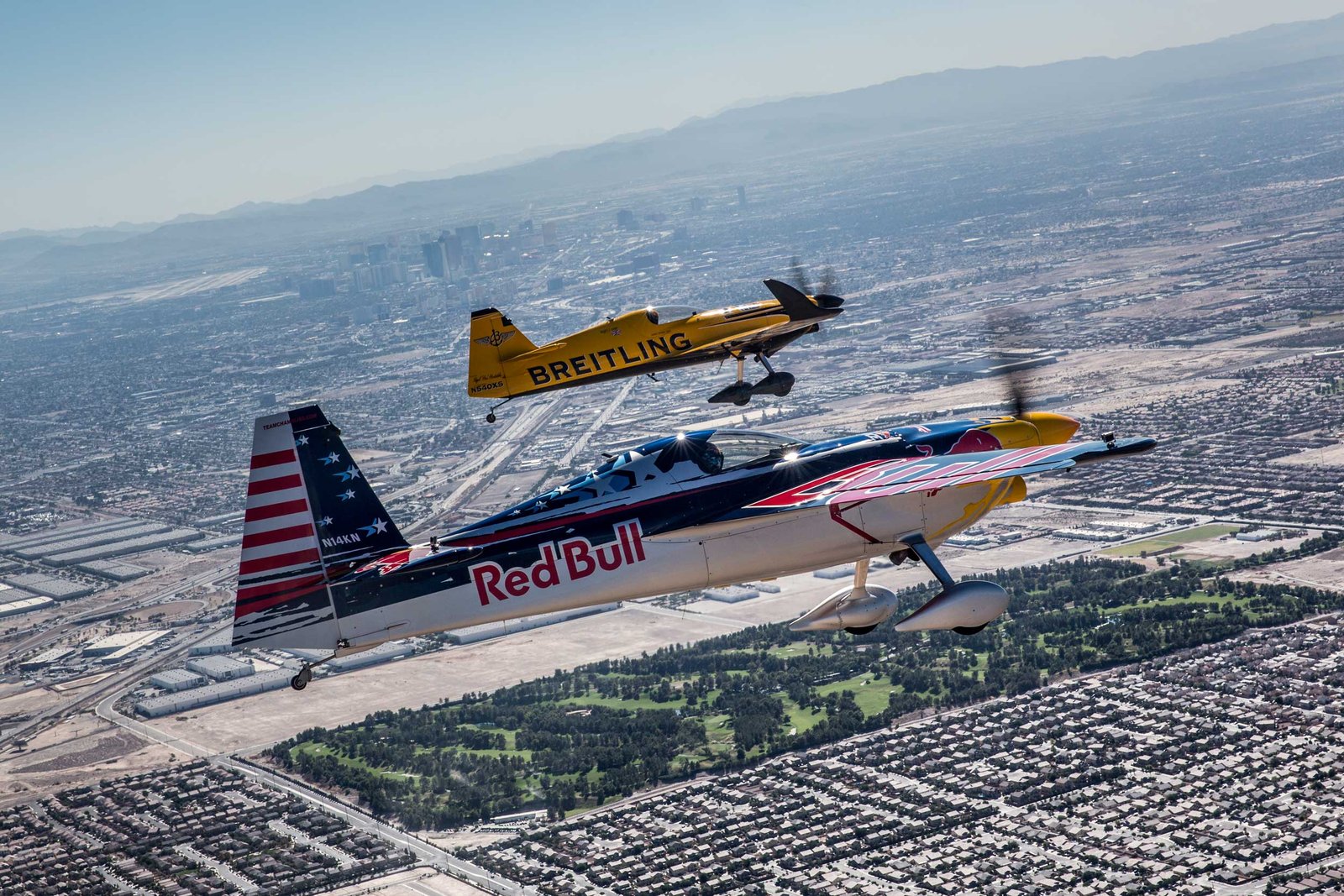
But that’s the military. For us mere mortals, who learned to fly on a typical Private Pilot’s Licence syllabus and never been through the taxpayer-funded rigorous training of a military pilot, those skills which require fine judgement of distance, speed and expert hand-eye coordination need constant attention. Use ’em or lose ’em, as the saying goes.
Actually, structured training is really enjoyable particularly if you do it with a bunch of pilots such as those at Ultimate High, the UK’s ‘academy’, for wont of a better word, for advanced training. That’s where I went for my first formation flying course, though the company was then based at Kemble Aerodrome in Gloucestershire (now re-named ‘Cotswolds Airport’), and now they are located at Goodwood Aerodrome, on the UK’s south coast.
Ultimate High has a selection of former military pilots to call upon as instructors, many of whom are now current airline pilots. My original course was in a Scottish Aviation Bulldog, itself a former military trainer. It’s an aircraft with limited aerobatic ability, a strong airframe and a 200hp Rolls-Royce piston engine. It also has the all-important control stick, rather than a yoke, and a left-hand throttle. This arrangement is perfect for formation flying, where you are constantly making small adjustments with the throttle and almost instinctive tiny movements of the stick.
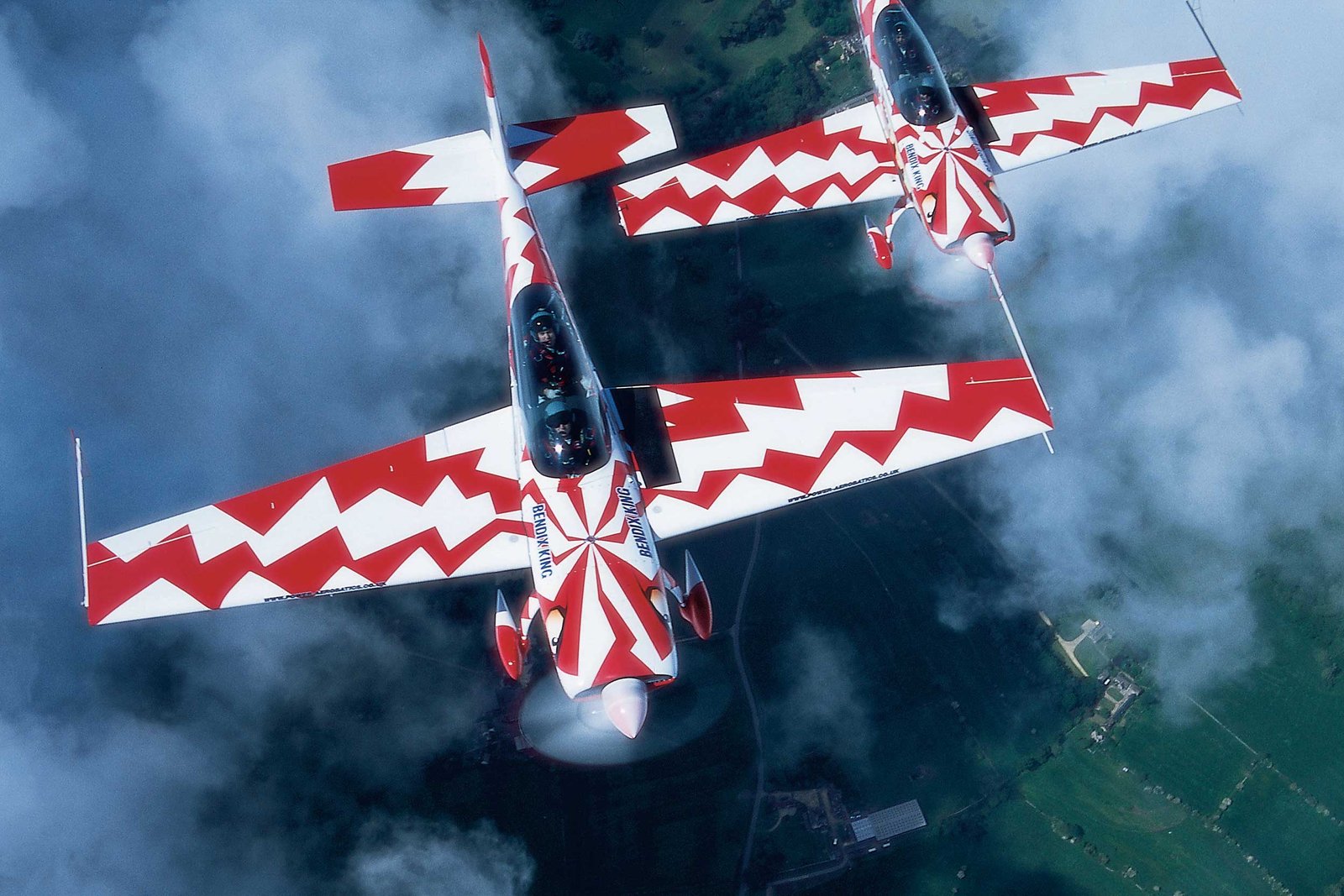
The trick is to get into the perfect position – and we’re talking about ‘close’ formation here, within ten feet or so, not flippin’ miles away – and then note a couple of reference points. One to establish that you’re not gaining on the lead aircraft or slipping back, and another to establish the correct distance from the lead aircraft. I’ve never flown in a formation bigger than two aircraft but if there was a third aircraft, say, in echelon behind, you just ignore that aircraft and trust him to stay in the right position, formating on you.
There are safety-led procedures for getting into position, and for breaking away, especially should you lose sight of the lead aircraft – for instance, if you’ve overshot and he’s now behind you. And just when you think you’re getting the hang of it, the instructor tells you to swap to the other side of the lead aircraft. There’s a procedure for this too which involves moving out a bit, dropping back and down, moving across while watching the tail of the lead aircraft, then up and back into position.
After 30 minutes of this, not only are you soaked in perspiration but you’re mentally addled as well. And that’s just straight and level! The fun really hots up when introduced to staying in formation while turning, climbing and descending. Ultimate High’s approach is to segment the course into short sessions, with breaks back on the ground to de-brief on what you’ve just done, relax, then brief on the next sortie… all very military-like.
One bonus of formation flying is that your handling skills are much, much sharper afterwards. It’s a natural consequence of exercising fine judgement and small corrections, probably another reason why the military is so fond of formation training. What’s more, and this I really like, there’s no way some bright spark in a software company is going to be able to replace those pilot skills with an ‘app’… please tell me I’m right!